
Ads and social fill the top of your funnel. Email and SMS are how you make the people already in your database worth what they should be. That is the whole game in a business where about 73% of patients come back and the average visit is around $527 (American Med Spa Association). Our med spa marketing ideas post mentions email in one line. This is the full build, including the HIPAA and texting rules that the generic guides, almost all written by software vendors, quietly skip.
Why email and SMS are a med spa's highest-ROI channel
A med spa's product is recurring by design. Neuromodulators like Botox wear off in about three to four months; many facials and peels run monthly or quarterly. So a happy patient should return several times a year on a predictable clock, and the cheapest way to make that happen is a message to a list you already own. Unlike Google or Meta, the audience is not rented, the cost per send is near zero, and you can time each message to the patient's own treatment cycle.
The benchmark everyone quotes is email's roughly $36 return per $1 spent (Litmus), a general cross-industry figure rather than a med spa number, but the direction holds. More useful: automated flows dramatically out-earn one-off blasts. Across e-commerce, automated flows drive around 41% of email revenue from only about 5% of sends (Klaviyo). The lesson for a med spa is to build the automations below, not to send more newsletters. SMS adds speed: texts are opened at roughly 90% or more and read within minutes, with an average response in about 90 seconds (Omnisend), which is why it owns the time-sensitive jobs.
Email or SMS? Match the message to the channel
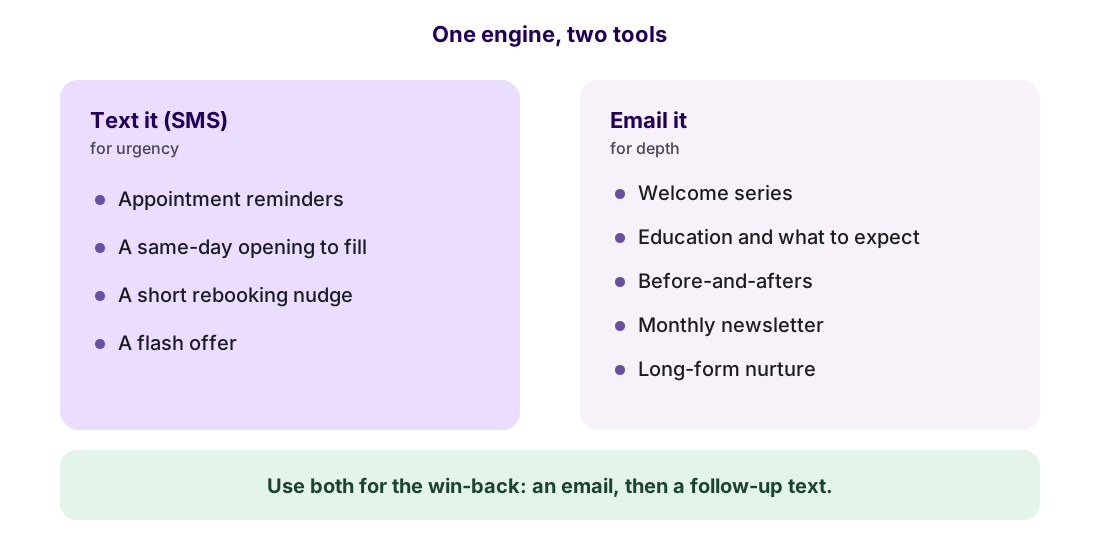
They are one engine with two tools. Use each for what it does best:
- Email for depth: education, before-and-afters, newsletters, longer nurture, anything with images or detail.
- SMS for urgency: appointment reminders, a same-day opening to fill, a short rebooking nudge, a flash offer.
- Both for the high-value moments: a win-back often pairs an email with a follow-up text.
Over-texting is the fastest way to earn opt-outs, so keep SMS rare and valuable and let email carry the volume.
The automations that rebook patients
This is where the money is. Set these up once against your booking data and they run on every patient automatically.
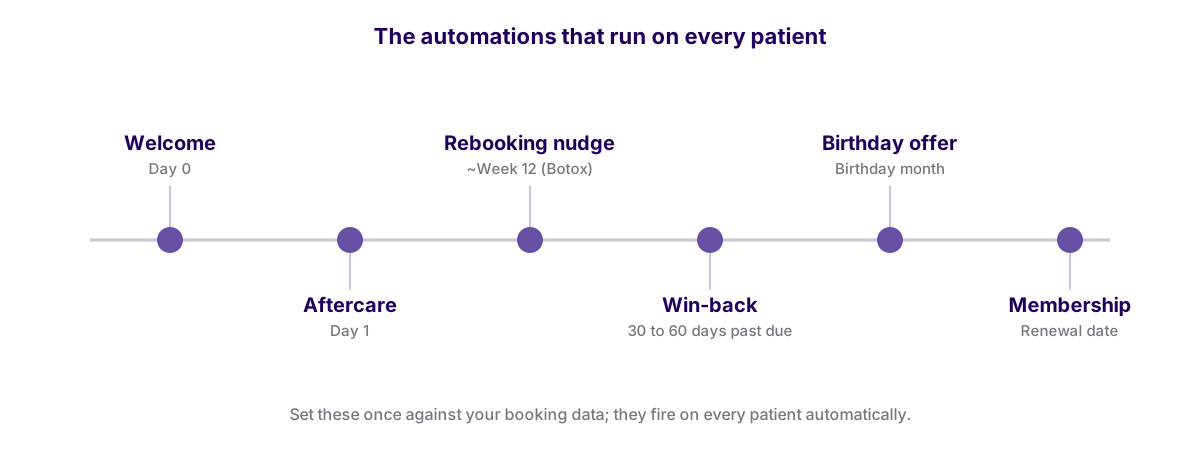
- Welcome series. Trigger: a new subscriber or first booking. Send one message immediately, then one or two over the next week introducing your providers and most popular first treatments. Goal: turn a new contact into a first or second visit.
- Post-treatment aftercare and rebooking. Trigger: a completed treatment. Send aftercare within a day, then a rebooking nudge timed to that treatment's cycle: around the 12-week mark for a neuromodulator, monthly for a facial. This single automation is what converts the recurring nature of the work into revenue.
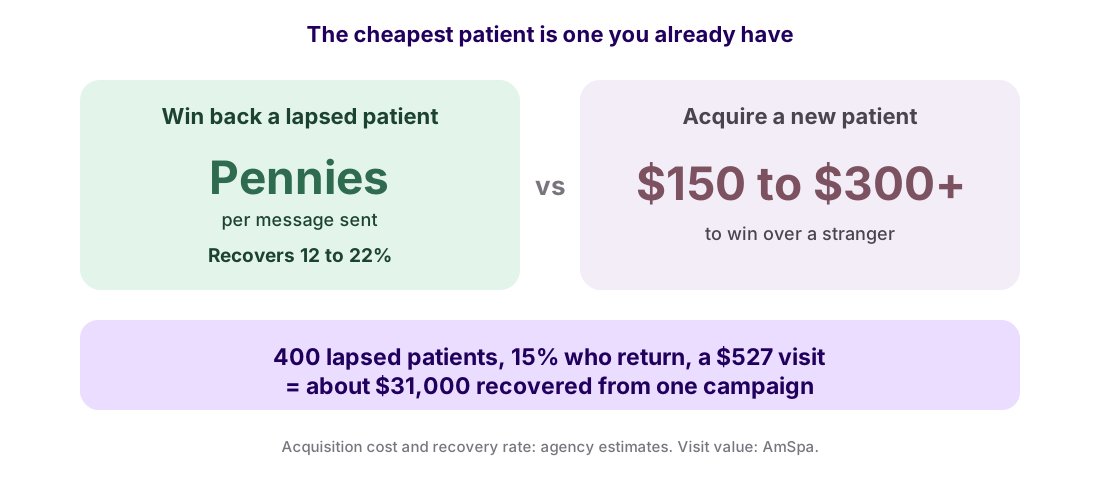
- Lapsed-patient win-back. Trigger: no booking past the expected cycle (say 30 to 60 days past due). A short two or three message sequence: we miss you, a reason to return, a final time-boxed offer. The math is lopsided in your favor: reactivating a past patient costs pennies, while what it costs to acquire a new patient runs $150 to $300 or more, and agencies commonly report win-back campaigns recovering 12% to 22% of lapsed patients.
- Birthday and membership. A birthday-month perk is a warm, low-pressure reason to book. Membership onboarding and renewal reminders keep recurring revenue from quietly churning.
- Review request. A day or two after a happy visit, send an automated review request (without incentivizing it, see compliance). Reviews feed the local ranking your marketing plan depends on.
- No-show and last-minute fill. When a cancellation opens a slot, text a waitlist segment. SMS wins here because email is too slow to fill a 2pm opening at 11am.
A few subject lines that fit each, written to stay HIPAA-safe (never a treatment named next to a person):
- Welcome: "Welcome to [Spa], here is where to start"
- Rebooking: "It is about time for your next visit" or "Ready for your refresh?"
- Win-back: "We miss you, here is $50 to come back" or "Your spot is still here"
- Birthday: "A little birthday treat, just for you"
- Review request: "How was your visit?"
Segment so these stay relevant: by treatment (a filler patient and a laser patient are on different clocks), by recency (active, due, lapsed), and by spend (members and high-value patients get different offers). The subject line does a lot of the work, so keep it specific and human ("You're due for a refresh," "We saved you a birthday treat"), and never put a treatment name tied to a person in a subject line.
What to send when nothing is triggered
Beyond the automations, a monthly newsletter keeps you top of mind without nagging. Monthly is the sweet spot: quarterly gets forgotten, weekly burns the list out. Send what a patient actually wants: a seasonal treatment angle (post-summer skin repair, pre-wedding-season timelines, winter resurfacing while sun exposure is low), a new treatment or provider introduction, or one short educational piece that answers a real consultation question. Keep promotions a minority of what you send, and keep the tone educational and benefit-led rather than a wall of discounts, which only trains patients to wait for the next sale. Reserve SMS broadcasts for genuinely time-sensitive or high-value moments.
What counts as a normal open rate
Judge your results against honest benchmarks. The closest public proxy to a med spa is e-commerce beauty and health: open rates around 29% and click rates under 1% (Omnisend), which are general segment figures, not med spa numbers. One caveat that matters: Apple's Mail Privacy Protection inflates open rates for a large share of recipients, so weight clicks and booked appointments over opens. The metric that actually counts is not opens, it is rebookings.
Growing your list the right way
You cannot buy a compliant med spa list, and you should not try. Build it from people who already trust you: capture an email and a separate SMS opt-in at booking and at checkout, give a genuine reason to subscribe (a first-visit perk, a simple skincare guide), and add every in-person patient with their consent. A smaller list of real patients out-earns a big bought one every time, and it keeps you on the right side of the consent rules below.
The compliance nobody explains
Most email guides for med spas are written by software companies and gloss over the legal part, because it implicates their own products. A med spa is usually a medical practice, so the stakes are real. This is education, not legal advice; confirm specifics with a healthcare attorney.
- HIPAA (US). Assume you are a covered entity unless your attorney says otherwise. Using protected health information for marketing generally needs written patient authorization (HHS HIPAA marketing guidance). In practice: a plain "time to book your next visit" reminder to an existing patient is generally fine as a treatment or operations message, but keep treatment details out of subject lines and unencrypted email, keep marketing and clinical data separate, and get a Business Associate Agreement with any platform that touches patient data.
- CAN-SPAM (US email). Every marketing email needs a truthful subject and header, a real physical address, and a working unsubscribe you honor promptly. Penalties can reach up to $53,088 per email (FTC).
- TCPA (US texts). Marketing texts require prior express written consent, collected separately from your email opt-in. As of 2026, consumers can revoke consent by any reasonable means and you must honor it within 10 business days, and texts should stay within 8am to 9pm local time (National Law Review). Keep dated records of consent.
- Outside the US, equivalents apply: GDPR and PECR in the UK and EU, CASL in Canada, the Spam Act in Australia. The common thread everywhere is the same: get explicit consent, make opting out easy, and keep medical details out of unsecured channels.
Choosing tools that connect to your booking system
The right tool for most med spas is the one built into your booking or practice-management software, because that is how the automations fire off real visit data and how a Business Associate Agreement comes along for the ride. Platforms like Zenoti, Boulevard, Pabau, and PatientNow bundle scheduling with email and SMS; standalone tools like Mailchimp or Klaviyo are more flexible and cheaper but need to be wired to your scheduler and may not sign a BAA (Portrait Care). The buying test is simple: does it trigger from a completed appointment, and will the vendor sign a BAA if it touches patient data? If not, you will end up sending manual blasts and the whole automation thesis falls apart.
Common email and SMS mistakes med spas make
- Treating it as acquisition, not retention, blasting promos to strangers instead of building the automations that rebook the patients you already have.
- Running occasional campaigns but no automations, which is where most of the revenue actually sits.
- No rebooking sequence timed to the treatment cycle, the single biggest missed lever.
- Putting treatment details in a plain email or text, which can be a privacy violation.
- Reusing one consent for everything, treating the email opt-in as permission to send marketing texts.
- Making people work to unsubscribe instead of honoring opt-outs promptly.
- Over-texting, so patients mute, block, or report you.
- Promising outcomes ("Botox lasts exactly this long," "guaranteed results"), which is both a trust and a compliance problem.
- An email tool that is not connected to your scheduler, so automations never trigger and the data goes stale.
Frequently asked questions
Does email marketing work for a med spa? Yes, as a retention engine. The repeat economics (about 73% of patients return, $527 a visit) mean automated rebooking and win-back sequences pay for themselves many times over. Build automations, not just newsletters.
What email automations should I set up first? The post-treatment rebooking nudge and the lapsed-patient win-back. Those two convert the recurring nature of treatments into revenue and reactivate patients you already paid to acquire.
How often should a med spa send marketing emails? A monthly newsletter plus the triggered automations is the sweet spot. Keep SMS rarer and reserved for time-sensitive, high-value messages so you do not drive opt-outs.
Is it legal to email or text my patients about promotions? Carefully. HIPAA generally requires written authorization to use patient health information for marketing, and the TCPA requires express written consent for marketing texts. Keep treatment details out of the message and confirm your specifics with a healthcare attorney.
Email or SMS, which is better for a med spa? Both, for different jobs. Email carries depth and volume (education, newsletters, before-and-afters); SMS carries urgency (reminders, last-minute openings, flash offers).
What is a good open rate for med spa emails? Beauty and health email opens run around 29% as a general proxy, but Apple Mail Privacy Protection inflates opens, so judge yourself on clicks and rebookings instead.
This is part of our med spa marketing playbook. The hub is med spa SEO and marketing, and the companions are the marketing plan, marketing ideas, and social media marketing for med spas.
Sitting on a patient list you never email? We will send you an email and a text for each of the six automations above, ready to paste, free. Send me the templates


