
Patients now research and shortlist a med spa on Instagram and TikTok before they ever call. For the youngest patients, the social profile is the search result: among 18-to-24-year-olds, Instagram (67%) and TikTok (62%) both edge out Google for finding local businesses (SOCi). The problem is that most med spa social media is a feed of posts that collect a few likes and book nobody. This guide is the organic playbook: free reach you build with content and consistency, aimed squarely at filling the calendar.
Organic social or paid ads? Know which job you are doing
These are two different tools, and owners constantly blur them.
- Organic social is the free reach you earn by posting, engaging, and being consistent. It builds trust and discovery over time. That is this guide.
- Paid social is renting reach: money behind an ad to reach people who do not follow you. The targeting, ad-policy limits, and cost are a different skill set (Meta rejects most before-and-after creative, for one), covered in med spa advertising.
You need both eventually, but they are not interchangeable, and you should not pay to boost a post until your organic content actually converts. For the budget that splits across both, see the med spa marketing plan.
Why your med spa's social media feels stuck
If you post regularly and still get no bookings, the cause is almost always one of these: you treat the feed like a billboard (announcements, no engagement), you chase polish over authenticity, there is no clear next step (no booking link, no call to action), or you post what the spa wants to show instead of what a nervous first-timer wants to see. People do not book because a photo is pretty. They book because a provider answered the question in their head and made it easy to act. Run the quick test: open your own profile as a stranger would, and see if you can tell what you treat, where you are, and how to book within five seconds. If not, that is the leak, not your posting frequency. Fix the job your content is doing before you change how often you post.
Pick your platforms by where your patients are
You cannot do every platform well, so choose by where your patients actually are, not by hype. Aesthetic patients are visual and trust-driven: 87% say before-and-after photos matter when choosing a provider, and 41% say a provider's social presence positively swayed them (Aesthetic Surgery Journal). Match that to platform demographics:
- Instagram is the core. Highest intent for researching a business, the platform aesthetic patients explicitly use to vet providers, and the top discovery tool for under-25s. If you do one platform, do this one.
- TikTok reaches the youngest patients. About 37% of US adults use it, skewing well under 35 (Pew Research). Strong for education and discovery if you serve that crowd and can sustain video. It also has stricter rules on cosmetic-procedure content (below).
- Facebook still matters for older, higher-ticket patients. About 71% of US adults use it, skewing 35 and up (Pew Research), and it is a heavy review and local-discovery surface. Not dead for med spas, just a different age.
- YouTube Shorts is for repurposing, not a starting point: a home for your best Reels and longer "what to expect" explainers.
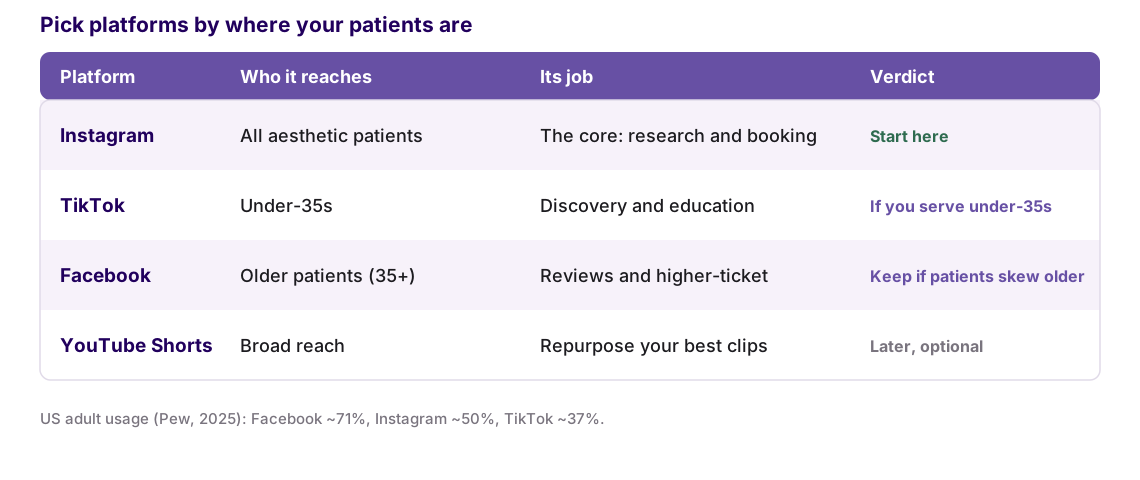
Pick one or two, do them well, and skip the rest until you have the bandwidth.
What to post: content that books, not just likes
Order your content by what aesthetic patients respond to, and make most of it short video, which consistently out-engages static photos (about 0.50% versus 0.35% engagement) (Socialinsider). Health and beauty brands now post nearly twice as many Reels as photos, and Reels engage nearly as well, the format the algorithm pushes hardest (RivalIQ). The pillars, in priority:
- Results, shown carefully. Before-and-afters are the most-preferred content for aesthetic patients, but they carry consent and platform rules (see the note below). A single realistic result is safer than a dramatic side-by-side.
- Education. Answer the questions a nervous first-timer types: does it hurt, what is the downtime, who performs it. This is also what younger patients search for inside the apps.
- Provider on camera. That 41% finding is about the provider's presence, so a clinician explaining a treatment builds more trust than any graphic.
- Patient stories and user content, with consent. People trust other patients far more than they trust your marketing: user-generated content is seen as roughly 2.5 times more authentic than brand content, and most people say it influences what they buy (Bazaarvoice). A reshared client clip, with permission, is your highest-trust, lowest-cost post.
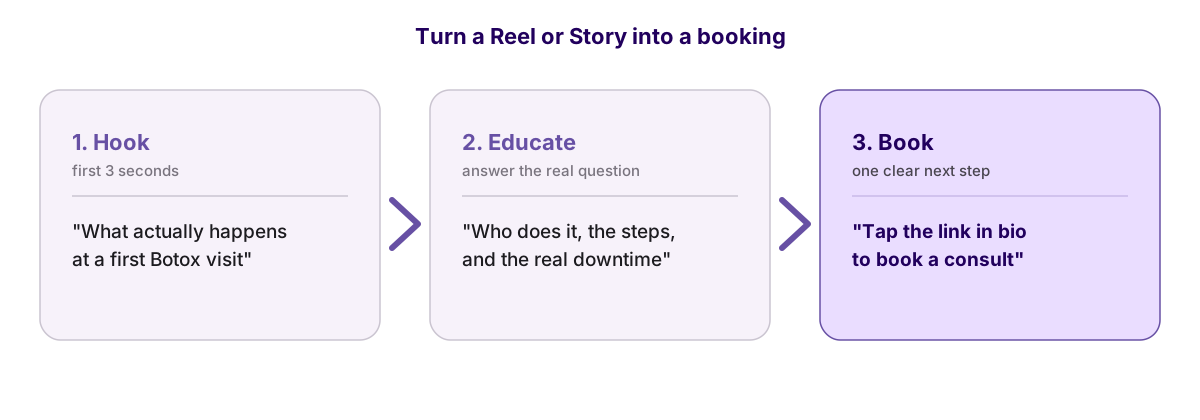
The format that converts is a simple, repeatable sequence you can run on a Reel, a TikTok, or a Story: hook in the first one to three seconds, then educate, then a clear call to action with the booking link. Keep most videos under about 30 seconds, because completion rate (whether people watch to the end) is what the algorithm rewards, and a tight 20-second clip beats a rambling 90-second one. Save longer cuts for deeper education, where people will stay for the answer.
For frequency, consistency beats volume: a rhythm you can hold beats a two-week sprint then silence. A sustainable starting cadence:
| Platform | Feed posts | Stories |
|---|---|---|
| 3 to 5 per week | Daily | |
| TikTok | 4 to 6 per week | n/a |
| 3 to 4 per week | A few per week |
(Cadence guidance from Portrait Care; pick what you can keep up forever, not what looks impressive for a month.)
Measure bookings, not followers
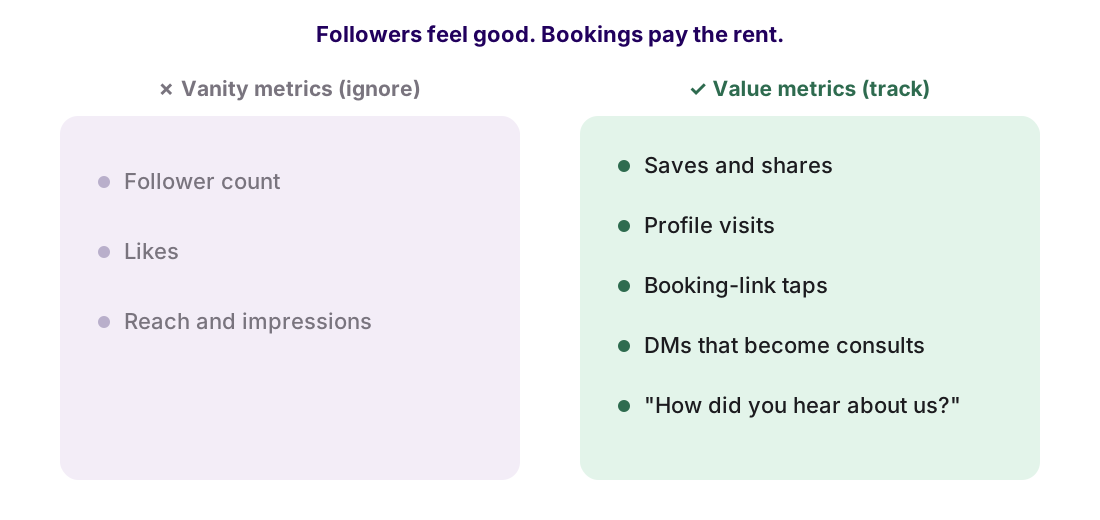
Followers and likes are vanity metrics: they feel good and pay nothing. Track the numbers that lead to revenue instead: saves, shares, profile visits, taps on your booking link, and DMs that turn into consults. The simplest attribution is the oldest one: ask every new patient how they found you. Set the profile up to convert (one clear booking link in the bio, a call to action on every post), then watch the path from profile visit to booking click, not the follower count.
Organic social also feeds your local SEO indirectly. It does not directly move Google rankings, but it drives branded searches and the clicks, calls, and direction requests that do, and it points people to the Google Business Profile your social traffic should point to and the reviews that actually rank (Yext). One benchmark to calibrate expectations: health and beauty accounts run a low median engagement rate (around 0.14% on Instagram) in a saturated market (RivalIQ), so judge yourself on bookings, not on going viral.
Your first 30 days on social
You do not need a content studio, you need a repeatable habit:
- Week 1: Pick one platform (Instagram for most spas) and set the profile up as a booking funnel: a clear bio, your location, and one booking link.
- Week 2: Batch-film. Have a provider or your front desk shoot five to ten short clips in a single session (a treatment explainer, a provider intro, a single result with consent). Filming in batches is the only way busy owners stay consistent.
- Week 3: Post three to five of them across the week using the hook-educate-book sequence, and reply to every comment and DM the same day.
- Week 4: Look at what actually drove profile visits and booking taps, make more of that, and drop what flopped.
A steady three posts a week for a year beats a viral burst followed by silence, because patients book the spa that looks present and active, not the one that went quiet in March.
The compliance organic posts still carry
Organic social is not the consequence-free zone owners assume. Three rules apply to unpaid posts:
- Disclosure. If an employee, friend, or influencer posts about your spa, any material connection (employment, free or discounted treatment, payment) must be clearly disclosed in the post itself, not buried in a bio (FTC).
- No fake anything. The FTC's 2024 rule bans fake or AI-generated reviews, undisclosed staff reviews, and buying followers, with penalties up to $53,088 per violation (FTC). The "buy 10,000 followers" growth hack is now illegal, not just hollow.
- Platform health rules. Cosmetic and health content faces stricter platform policies than an ordinary local business, especially on TikTok, so some organic posts get limited reach or get removed.
These are US references; non-US spas have equivalents (your advertising regulator, plus data-protection law like GDPR). The throughline everywhere: be honest, get consent, and disclose connections.
Frequently asked questions
How often should a med spa post on social media? Consistently, on a cadence you can sustain: roughly 3 to 5 feed posts a week on Instagram plus daily Stories, 4 to 6 a week on TikTok, 3 to 4 on Facebook. A steady rhythm beats a burst followed by silence.
What should a med spa post? In priority: realistic results (with consent), education that answers a first-timer's questions, the provider on camera, and patient stories. Make most of it short video.
Which social platform is best for a med spa? Instagram for almost everyone, TikTok if you serve an under-35 crowd and can sustain video, and Facebook for an older, higher-ticket audience. Pick one or two and do them well.
Can I post before-and-after photos on my med spa's social media? Yes, with written patient consent that specifically names the platform, and a single realistic result is safer than a dramatic side-by-side. The rules are even stricter for paid ads, which is covered in med spa advertising.
Is social media free, or do I have to pay for ads? Organic posting is free (it costs time, not money). Paying to boost posts or run ads is a separate channel with its own rules, covered in med spa advertising.
How do I know if my med spa's social media is working? Track bookings, profile visits, and booking-link taps, not followers and likes. Ask every new patient how they found you.
This is part of our med spa marketing playbook. The hub is med spa SEO and marketing, and the companions are the marketing plan, marketing ideas, and email marketing for med spas.
Posting a lot and booking little? Send us your pages and we will tell you the three changes that would turn more followers into bookings, free. Review my social pages


